
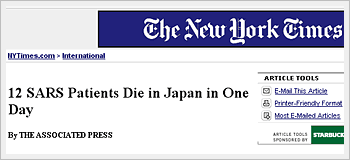
Now my father is in the biz, so I know mistakes can obviously happen in any newsroom, but for the life of me I can’t figure out how some editor (or intern?) substituted Japan for Hong Kong in the headline for a story of yet more SARS-related deaths in Hong Kong, as pictured above (the story is here at New York Times online, though I suspect the headline will be corrected fairly shortly). In the Times’ defense, I’m sure this error was committed over at Associated Press, as it’s just a wire story being picked up and published as is. But at a time when there is a lot of panic about SARS, especially here in other as-yet-unaffected parts of Asia like Japan, it seems mighty careless and irresponsible of them, no matter who originally made the mistake. These kind of glaring errors rarely happen in print editions, with gauntlets of editors and proofreaders to go through, but they seem all too common online. When will we get to the point where online editions must pass through the same scrutiny?
When they are preapared to pay real professionals to do the work I guess….
Heh. You would think that the workflow should be the same, regardless of the ultimate destination of the article. It takes the same resources to edit an article for print or for the Web.
Perhaps, as Gomichild suggests, it is time for the AP to invest in a better Content Management System (and, of course, a better editor to go with it).
HEY! I was a real professional in the biz for three years! Keep in mind that, despite all evdience to the contrary, journalists – even the web-based ones – are people and do make mistakes.
And if you really think that “these kind of mistakes rarely happen in print editions,” boy have I got some funny stories for you.
Yeah, it’s a major mistake. The AP royally screwed the pooch on this one. But you’ll never see the same scrutiny in online editions as in print, because there will never be a need for that many people to work on the same Web page.