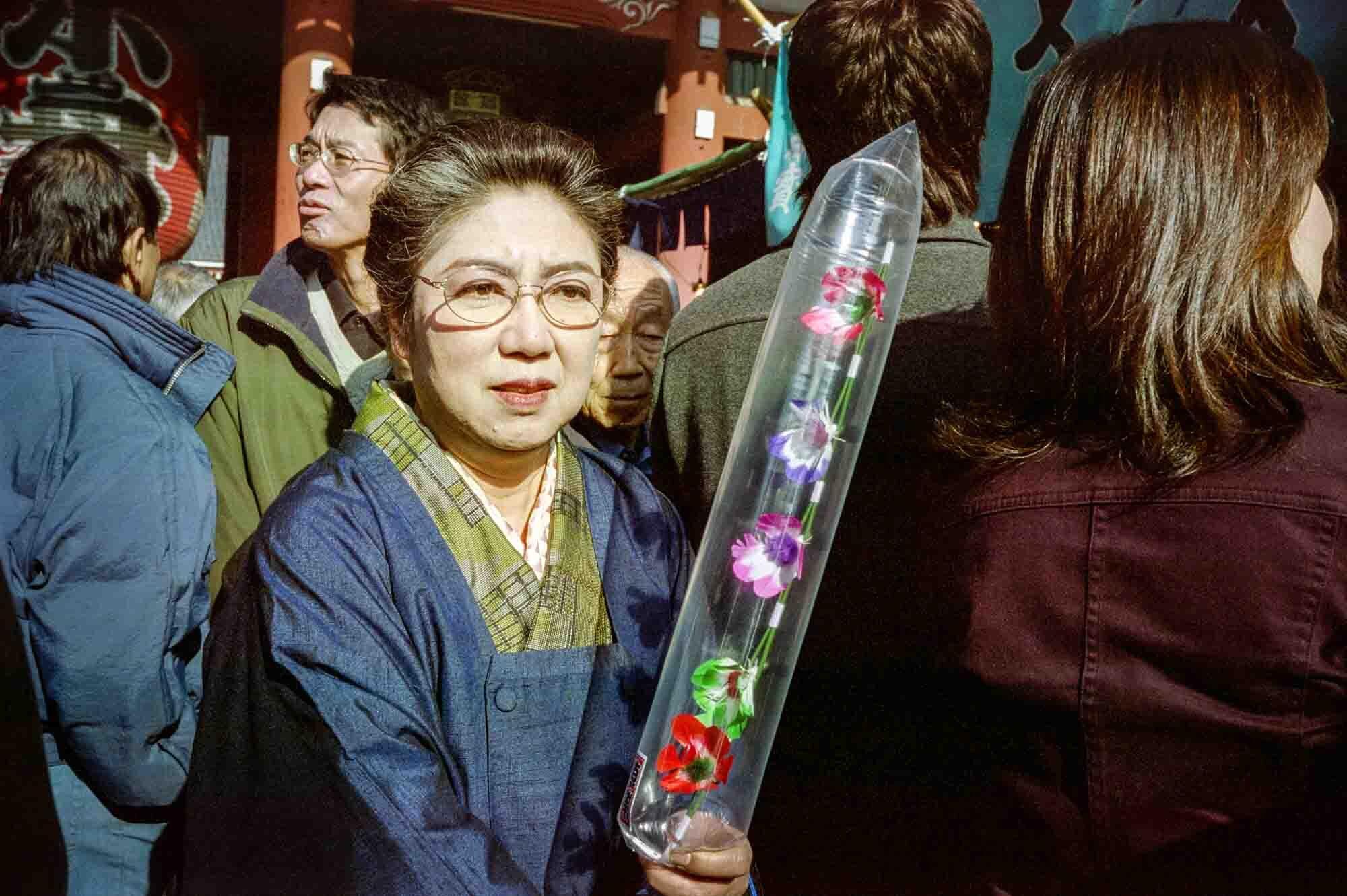
Feeling the need to jumpstart my flagging photo diary, which like many of my extracurricular pursuits these days have taken a hit from the duty call of gainful employment, I spent two quite wonderful and solitary days traversing with camera in hand through the wonderful backstreets of shitamachi Tokyo.
Shitamachi translated literally means “downtown”, but a more nuanced translation is something along the lines of “home for the common people,” and the term is commonly used these days to describe those parts of Tokyo that have retained the feel of old Edo-era Tokyo, such as districts like Asakusa, Ueno and Yanaka.
I’ve always been taken with these parts of Tokyo, in large part because they tend to occupuy a prominent place as both subject and backdrop to the ukiyo-e woodblock prints of Hiroshige and Harunobu that are so dear to me. Much of the “floating world” tableau of the works by these two and other artists was centered on the old Edo-era pleasure quarter of Yoshiwara, where sophisticated and refined courtesans would entertain wealthy Edo-ites. I had always wanted to visit Yoshiwara, even back during my first trip here in 1997, but I was told it didn’t exist anymore. (Perhaps I had asked too directly?)
However, during my wanderings this past Saturday, which used Sensoji Temple as the anchor, I had the distinct feeling that the seemingly mythical pleasure quarter was within reach, if not geographically, then spiritually. I found myself meandering through the backstreets of Rokku, with its cheap foodstalls, mosaic-porn theaters, and off-track betting parlors, streets crammed full of oyaji with horse-racing tipsheets and glazed-over otaku faces and delinquent kids being questioned and Polaroided by police, in short what passes for seamy and seedy in safe and courteous Tokyo, and what my mother-in-law called an etchi neighborhood.
But as I continued to wander, further afield from the tourbus and tourguide-choked Sensoji, I soon found myself across the street from an imposing series of buildings that had all the markings of a real etchi (read: lewd) neighborhood: 3 or 4 men marking the entrance of each establishment with uniform black slacks, white long sleeve shirts and ties, and a row of taxis disgorging 50 year old-plus salarymen or young 20-something non-Japanese women. In other words, the unmistakable signs of a land of Soaplands. I remembered reading something somewhere that all that existed of refined Yoshiwara was some tawdry message parlors cum whorehouses. Could it be that I had found Yoshiwara?
I didn’t venture down the street (nor the second one I found that ran parallel to the first) — foreigners are usually not welcome at such establishments (unless they’re female and part of the usually Fillipino staff), and I didn’t feel walking down this gauntlet of soaplands with camera in hand would endear me to the intimidating taxi door openers. I dare imagine at any rate that these streets would have yielded few clues as to any history, if any at all, that they might have. Certainly there was no “Great Gate” as Yoshiwara had (apparently the only entrance into the quarter), but there was most definitely a figurative gate that barred my entrance.
Of course, being a much more fearless web wanderer, I have been poring through sites trying to determine if in fact Yoshiwara still exists. Nothing conclusive yet (and I have yet to broach the Japanese only sites), but I did run across a quite unexpected site with a map, some images, and a history of the old pleasure quarter. The site is the syllabus for a University of Delaware history course entitled Popular Culture in Urban Japan, and Yoshiwara forms just one part of a site that looks at other shitamachi parts of Tokyo, as well as manga and other aspects of Japanese pop culture. (Particulary worthwhile is the Online Resources section where Professor Gerald Figal has uploaded .pdf files of various texts he’s made required reading for his students.) Among the images on display is this one purportedly to be of a Yoshiwara building in the 1960’s. One of these days I’ll muster up the resolve to walk the soapland alleys I found and mine further whether I did indeed stumble across the the mythical Yoshiwara.
UPDATE: Professor Figal emailed me after I posted the above:
The answer to your Yoshiwara question is yes, the district still exists, but it’s a tawdry soapland (massage palors, sex shows, etc.) nowadays. You should venture out there some time to see for yourself!
Yoshiwara sounds like something mystique to me. Hope you’ll get to the heart of it. 😉
The Yoshiwara enclave (now most built over) can be reached by taking the Hibiya subway north to Minowa station, past Akihaba and then Ueno. Exit east.
the wide blvd. going away will take you past Nihon… (something) and then to Daimon.
Daimon is the Great Gate and the curvy road off to your right was the curving entrance to Yoshiwara.
Where it straightens out was where the Great Gate stood and the straight road ahead was the center Nakanocho main street. Three cross streets comprised the interior and then the back wall.
The Nihon (something) street – if you had turned right there – was the boundary right wall. The left boundary wall ran between today’s 3-chome and 61-chome.
An old 1700 map can be found at
http://www.kurapaso.net/edo/edo_03-2.html
regards;
marc
Dear Kurt,
When brushing up my novel I pulled up you site again. Imagine my surprise (and 15 sec of fame) in reading your adventures and my directions in locating the old Yoshiwara.
I will be doing the same in June when I come to Japan to do some hands-on research of the area. I plan to visit the Taito Ward office to see if they’ll give me any material on the yoshiwara, a prisoner of war camp I hope was located there; Arakawa camp 20-D, and the Great Tokyo Fire Raid.
There is also a National Defense Archive
over in Ebisu where I hope to get some maps of the war era.
I was wondering how you handle the photos and woodblocks on your site. I would like to include some vintage prints like the Great gate and the old maps of the quarter but I know all the woodblocks are owned and am not sure how to handle the reprint permission. (I assume the publisher, if I get one, will handle this but perhaps you have some advise. Today I’m trying to find a site other than Amazon, which will give me a glimpse of Japanese military uniforms.
Again, glad the directions were of help and to posting me to the world.
Keep up the good work.
Warmest Regards;
marc Hagan