
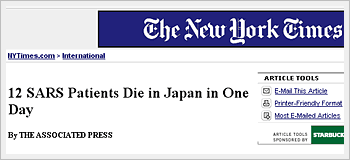
Now my father is in the biz, so I know mistakes can obviously happen in any newsroom, but for the life of me I can’t figure out how some editor (or intern?) substituted Japan for Hong Kong in the headline for a story of yet more SARS-related deaths in Hong Kong, as pictured above (the story is here at New York Times online, though I suspect the headline will be corrected fairly shortly). In the Times’ defense, I’m sure this error was committed over at Associated Press, as it’s just a wire story being picked up and published as is. But at a time when there is a lot of panic about SARS, especially here in other as-yet-unaffected parts of Asia like Japan, it seems mighty careless and irresponsible of them, no matter who originally made the mistake. These kind of glaring errors rarely happen in print editions, with gauntlets of editors and proofreaders to go through, but they seem all too common online. When will we get to the point where online editions must pass through the same scrutiny?
 In its worst nightmarish iteration, this is what you can look forward to when I start putting my nascent moblogging into high gear! (I can hear a stampede to the exits as I type). Seriously, it looks like a camera phone will be in hand soon (the above pic was taken a couple of weeks ago, by a friend — he sent it to Naoko for me, hence the hearts, which were added unbeknownst to me), so knock on wood expect something new and hopefully not too pedestrian in this neighborhood in the near future.