The bittersweet taste of kindness

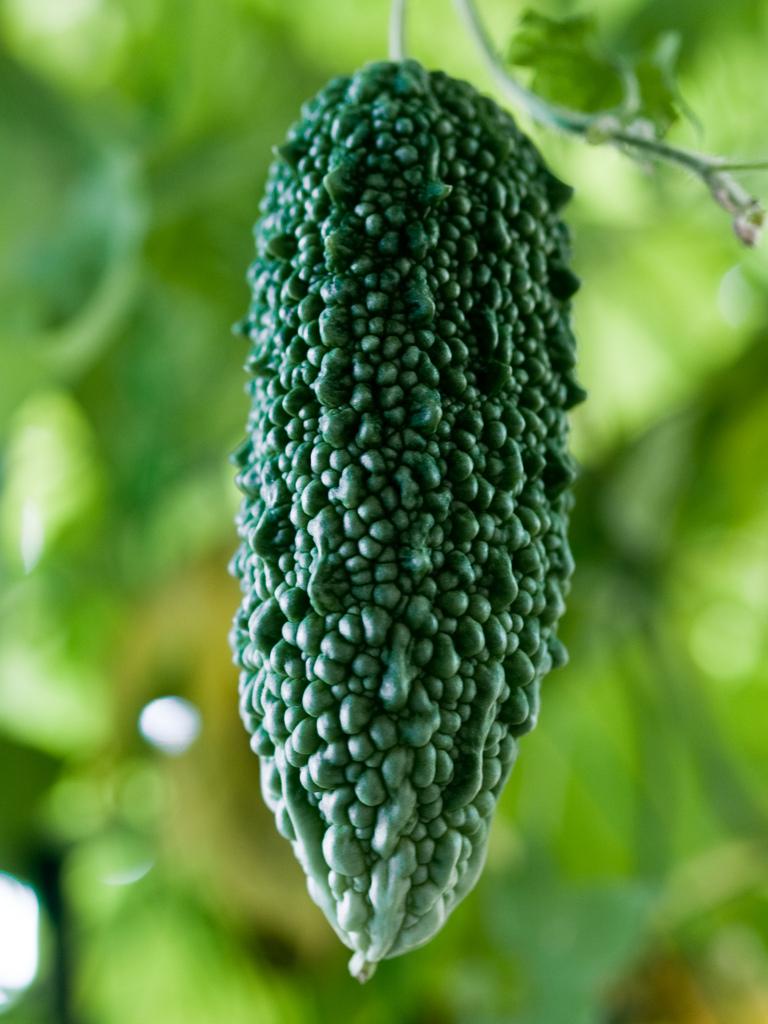
Goya by Flickr user mloge
Image courtesy of Flickr user mloge.

Today at one of my long-standing English-conversation teaching jobs, where I teach a group of five retirees over lunch in an upscale Chinese restaurant and have done so for over nine years, twice a month, I ordered this month’s “chef’s special”, which was a stir fry featuring 苦瓜 (nigauri, or “bitter melon”), perhaps more commonly known as ゴーヤー (goya), which is what the vegetable is called in Okinawa. Goya is one of those “acquired taste”-classified Japanese foods along the likes of fermented soybeans (納豆, natto) or sour plums (梅干し, umeboshi), and I’m sure there are a whole host of non-Japanese living here who hate the stuff, as well as plenty of Japanese folk who feel the same. For my part, although initially taken aback by its strong bitterness ten years ago, I quickly grew to like it, especially when served as it normally is in a stir fry along with eggs and tofu, which do a nice job of cutting some of the bitterness. In fact, in recent years I’ve grown to love it, so much so that on this same day one of the students gave me three pieces of goya that she grew in her community garden plot, as she has for several years now.

But the pleasures of goya will have to wait, for what inspired this post was what happened when I told the waitress my order. She replied, with a most concerned face,

「ゴーヤーは大丈夫ですか。」

(goya ha daijoubu desu ka, “Are you sure you can eat goya?”)

Now, I suppose it’s a measure of how long I’ve been here in Japan (10-plus years as of this writing) that this question fairly rolled off my back, though not enough so to keep me from answering her with a mock-seriousness to match her worry-contorted face, 「大丈夫だと思いますけど」(daijoubu da to omoimasu kedo, “I think it’s okay.”). And this particular waitress has asked this question before, regarding what I forget now but perhaps tofu, or baby shrimp, or some other food ripe for “foreigners must hate this” second-guessing. All to say that I was not entirely surprised by the question, but still tweaked enough to think this would make something worthwhile to write about.

The students for their part were of the impression that the waitress was 優しい (yasashii, ”kind; helpful”). In their view, no doubt, they thought the waitress was trying to stop me from ordering something I might not like, or find too bitter, and I can go along with that thinking somewhat. But it is my experience that a lot of what goes for kindness here in Japan would probably be viewed more as condescension back home in America. I tried to think of a similar situation in America where this might happen, but honestly I’m hard-pressed to come up with anything. Granted, the level of customer service being what it is, it’s not exactly a fair comparison. But in reality, in those places where customer service is top-notch, questioning whether a customer was ordering something they’d be able to eat just wouldn’t fly. I suppose a case could be made for the situation of the foreign tourist, struggling to read the menu, and the staff trying to steer them towards something less exotic and potentially unpalatable. But the waitress in my situation has been seeing me eat in this restaurant twice a month for over five years — not exactly a fledgling FOB needing to be coddled.

I’m not sure I really have anything “conclusive” to say about this whole thing. I mean, I find it curious that it didn’t rile me up more, but on the other hand I sort of take that as a positive. But I do think this level of do-gooder condescension does indicate, on some very small (but not inconsequential) level, that Japanese attitudes towards non-Japanese have a lot of room for improvement. But that said, won’t I miss the coddling when it’s gone — if I live to see that day?

Documentary on Japan’s Suicide Problem

Channel 4 Documentary Screen Shot Ages ago — ten years ago, in fact — I wrote about Japan’s high suicide rate. Today I came across a documentary on the subject that must have been made around this time, commissioned by Channel 4 in the UK, which someone uploaded to YouTube last year. Following this search will take you to all five parts (with the somewhat misleading title of “Secret Life of Japan”), or you can watch Part 1 below and continue on from there.

Not knowing anything about this film — and there’s very little information on the YouTube page aside from a (again slightly misleading) description, I assumed it was a Japanese made film (it’s completely in Japanese, with subtitles), yet couldn’t help but be surprised as it was quite unlike most Japanese made-for-TV documentaries I’ve seen. Alas, at the end the credits reveal that it indeed was not Japanese-made.

Of course this is not to say it couldn’t have been made by a Japanese, but I honestly don’t think any of your Japanese networks — to say nothing of the average viewer — would have been comfortable with the way the subject of suicide was treated, and the honesty of the opinions and stories of the various interviewees. The documentary also avoids, for the most part, the overly maudlin and manipulative tear-jerkingness of standard Japanese TV fare. The lack of a comforting and distancing narrator forces the viewer to listen to the stories — of the victims’ surviving family members, of employees dealing with the loss of what they thought were lifelong jobs, of people who for one reason or another ended up deciding not to kill themselves — as it these people were in the room with us.

Highly recommended.

Vivo! Beer + Dining Bar in Ikebukuro

Vivo entrance
The entrance to Vivo, adjacent to a Starbucks.

[Originally posted to my nascent “Japanese craft beer” blog — only two posts! — last October.]

Today I took advantage of having to go to Shinjuku for an errand to check out the well-regarded Vivo! Beer + Dining Bar in Ikebukuro on my way home. (Or did I take advantage of a desire to drink good beer to do the errand?)

Vivo! is most definitely a beer bar, with 20 different beers on tap as well as bottles of import beer to choose from. I was there on a Sunday around 4pm, and there were about five or six other customers, with a few more trickling in as it got closer to evening. The place is non-smoking with a cubby hole looking booth for people to have a puff, and there’s free wifi (ask one of the staff for the password).

Kin-oni Pale Ale
Kin-oni Pale Ale, in a “Regular” size glass

One thing I was ambivalent about were the sizes on offer, “Regular” which equates to 360ml, and “Half” which is 285ml, which was ¥150 cheaper than the Regular. In other words, whether you’re talking American or British pints, what’s on offer is neither. On the other hand, the prices did seems to reflect that you were getting less than a pint (at least compared to other places I’ve been to in high-rent areas like this one), and the smaller sizes can help to make even a high ABV IPA a bit more sessionable.

Of the 20 beers on tap, 14 of them were from Japanese, a great ratio if you ask me, especially when all with the exception of a Ebisu were from domestic craft breweries. Breweries like Sankt Gallen, Baird (which also makes a special IPA for Vivo), Coedo, Yoho, and Tamamura were represented, amongst others. (On the import side, you could get two kinds of Lagunitas, a Rogue, a Southern Tier, plus the ubiquitous Guinness.) You can see the full list of 20 (in Japanese and English) at Vivo!’s blog. Based on past blog posts, it would seem they change the lineup (slightly) every two weeks or so. Bottles were listed in the back of the menu, but I didn’t pay too much attention as I figured why go bottle when there are so many choices on tap.

For my first beer, I purposely chose something from a new-to-me brewery, in this case the Kin-Oni Pale Ale from Noboribetsu, a hot spring town about a hour from Sapporo in Hokkaido (and not a good enough web presence to link to, if I’m being honest). It was very good, well worth the ¥1000 yen I paid even though it wasn’t a full pint.

I did use the small size to rationalize getting another beer, and this time I chose the Harvest Ale from Southern Tier, a brewery from New York I’ve often heard of and seen in the shops but had yet to try. It was also rather tasty, though it didn’t knock my socks off the way the Kin-Oni did.

Vivo beer menu
More beer than you shake a stick at!

I did not order any food but judging from the menu it seemed reasonably priced, but can’t comment on anything like portions or taste. And speaking of the menu, I like how they have all 20 beers on tap spread over two pages, with a fair amount of information or commentary about each beer. While this is in Japanese, important things like the beer name, brewery, and beer style are printed in English, a nice plus.

Here’s a link to the location in Google Maps.

A quiet Sunday afternoon at Vivo!