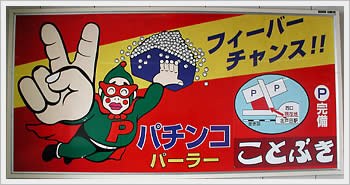
I seem to have stumbled upon an advertisement theme…. The above image is an advertisement for a local pachinko parlor, and was taken at my usual train station. The name of the parlor is Kotobuki (it’s spelled out using hiragana there in the bottom right corner), which means “congratulations” and is often associated with weddings (the kanji character for kotobuki is often printed on wedding portrait albums, for example). That bit of writing above the map is fiibaa chansu!!, or “fever chance.” The meaning being that you will get a fever (in the positive “excitement” sense of the word) if you hit jackpot. The writing in the middle reads pachinko paaraa, or “pachinko parlor.”
I have only been in a pachinko parlor once (not including an abandoned one), 2 years ago while visiting Kyoto. Ever since seeing Wim Wenders’ Tokyo-ga, which features a sequence on pachinko, I had wanted to experience one for myself. But now that I have, I can’t say I have a hankering to visit another anytime soon. The din of those tiny silver balls rattling around in machines, the fog of cigarette smoke, the depressing monotony of it — not for me. My father-in-law plays, usually making a trip to the parlor on his day off. When he leaves the house, he always has a sheepish grin on his face and mutters something about going to his second job. Of course he has to ask for money from my mother-in-law before he leaves, and depending on her mood he might have to wait, or do some chore, before he can go. My mother-in-law usually puts on an air of disapproval about the whole thing, and admonishes him to get a more respectable hobby, but in reality she often joins him at the parlor.
See this article from an old Mangajin Magazine issue for a good introduction to the game of pachinko and its place within Japanese culture, as well as its shady side.