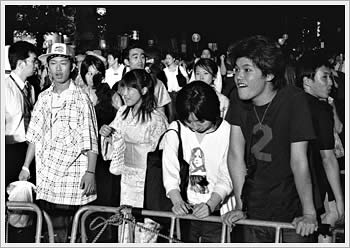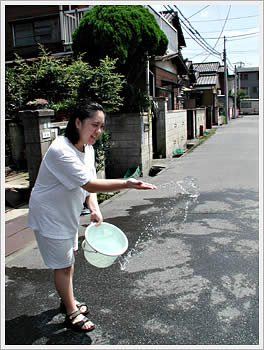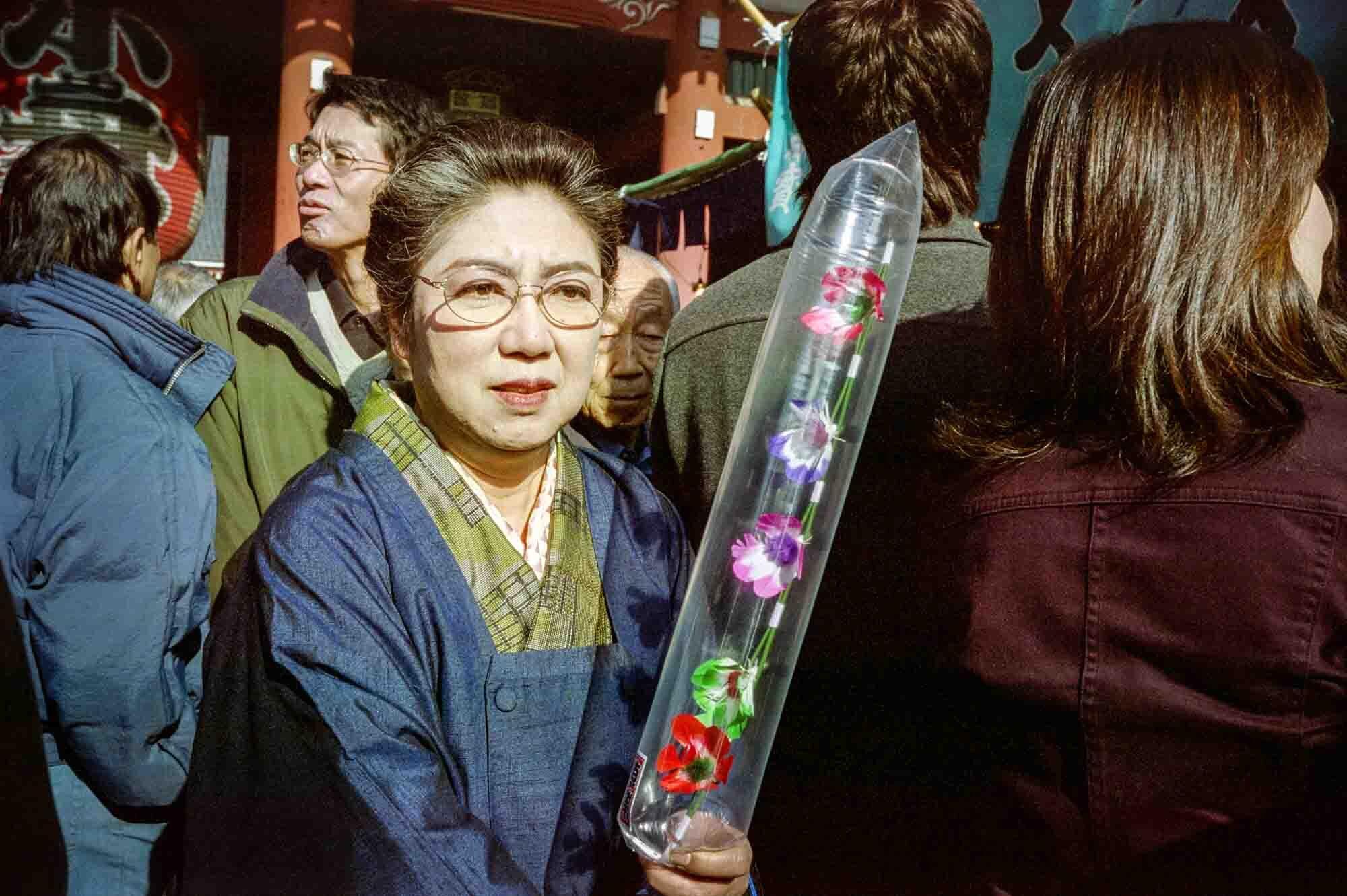


Yushima Tenjin, Tokyo (Bunkyo Ward), March 6, 2004. Bessa R2, CV 35mm, f/2.5 “P”, Konica Sinbi 100 Professional Color Reversal.
A couple of shots from last week’s Ume Festival at Yushima Tenjin in Tokyo, which I wrote briefly about here. These are from a roll of slide film I shot on that day, the first slide film I’ve shot in quite a while. (In a previous lifetime, I used to shoot nothing but slide film, but as they say, times they have changed.) It was shot on Konica’s Sinbi Professional Slide film, which I gather is not available outside of Japan. I’d never used it before myself, but had bought a few still-in-date rolls of it for 100 yen each the day before at Kamera no Kimura‘s “Photo Festa” sale (which incidentally, judging by what I saw during the 4 hours I was there, no other foreigner in Tokyo seemed to be aware of). Seeing as this film retails for 680 yen in the stores, I figured how wrong could one go with it. Judging from these two photos, I think I’d have to pronounce it officially “not bad.” Maybe it was just the day’s weather, which alternated between overcast and blue skies, but the film has a color pallete quite different from the Velvia or Kodachrome I used to shoot, and I find it rather pleasing. (Or perhaps, as they say, times they have changed).
Of course with any color film it helps to have a scanner that will half do it justice and this is a good segue to another Konica purchase I made at the “Photo Festa” (I swear I’m not on their payroll): The new Konica-Minolta (they recently merged in case you didn’t know) Dimage Scan Dual IV film scanner. This one was not a “deal,” but rather a pure impulse purchase (but from my okozukai or monthly allowance, so the Minister of Household Finances wasn’t forced to resign in protest). Ironically — and this is my comeuppance for succumbing to my impulses before doing adequate research — the scanner isn’t so hot at scanning black and white negatives, which is of course what I mostly shoot these days, at least out of the box. There are still tweaks to be tried, alternative software to be fooled with, manuals to be read (RTFM). But in the meantime, I must say what a joy it is to scan slides and color negative on the thing, compared to my Epson 2450 Perfection flatbed. With well exposed slides (like the second photo of Naoko with Kaika), there’s nary a correction one needs to do, relatively speaking. (In order to save the sky from blowing out completely in the top photo of Kaika and I, I had to do more adjustments in the scanning software, which forced me to make a lot more color adjustments in Photoshop; consequently I’m not really fully satisfied with this photo, but fuck-it as they say.)
If you get the chance, by all means visit Yushima Tenjin in Tokyo’s Bunkyo Ward, a short walk from Ueno Park. Before we decided where to go Saturday morning, I mentioned to Naoko that I’d like to see some plum blossoms, as they are one of those cherished though admittedly stereotyped visual associations I had about Japan before I actually got here, even more so than cherry blossoms, from Hiroshige no doubt. She couldn’t think of anywhere, but in a flash suggested Yushima. As so often happens in Japan, fortuitousness was smiling on us, and we discovered when we got there that the shrine’s annual Ume Festival was taking place. Not only that, but there were four weddings taking place that day, which added it’s solemn patina to the days festivities that blended in seamlessly with the festival in a way that only these shrine- and temple-based Japanese events seem capable of. “Reminds me of Ozu” was a thought conjured up more than once.
Naoko had been to the shrine once when she was in high school, at the insistence of one her friends (so she says). You see, Yushima Tenjin is famous for the many students who come during the winter and spring (which for them is “examination season”) to buy talismans and pray they pass their various college entrance examinations. They buy these wood plaques (I forget what they’re called in Japanese just now) and inscribe wishes on them, and the shrine was teeming with them.